FlemingClans.com

"Scotland's Fleming Clan: a Genealogical History" - coming in 2027!
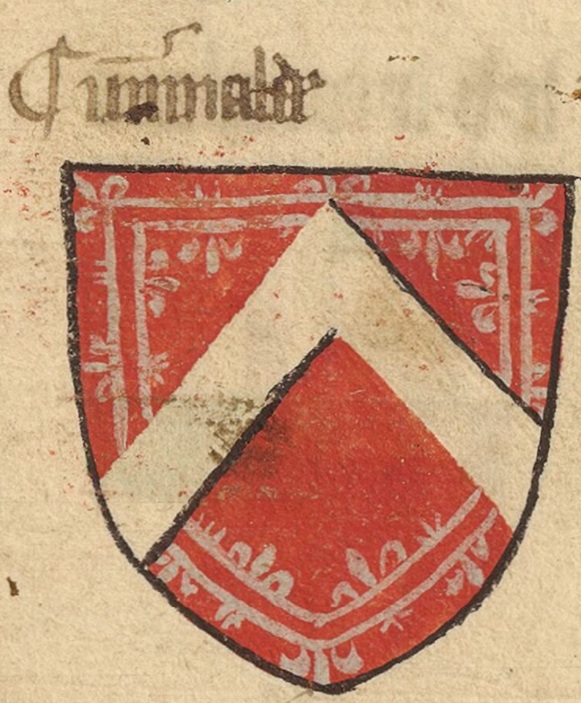 11th chief - Sir Malcolm Fleming of Biggar and Cumbernauld
(c1372 - 1440)
Basic information about this person: \click here\
Sir Malcolm Fleming, son of Sir David Fleming and Isobel de Strachan, married into the royal house of Stewart and prospered under his father-in-law, the Duke of Albany. But he lived through dangerous times, and his life ended on the scaffold after the infamous Black Dinner of 1440.
Heir to Cumbernauld
Malcolm was born around 1372 and was already a knight, styled Sir Malcolm Fleming of Cumbernauld, when he witnessed a charter of Patrick de Graham, Lord of Kincardine, in about 1389. On 7 March 1401 King Robert III granted the castle and lands of Cumbernauld to him and his heirs male, failing whom to his brother David, while reserving their father’s liferent. Further royal charters gave him Barbreck in Carrick in 1404 and the barony of Cavers in 1405, and after his father’s murder in February 1406 Cumbernauld was confirmed to him on 2 April 1406.
Son-in-law of Albany
Malcolm married Elizabeth Stewart, daughter of Robert Stewart, Duke of Albany, who governed Scotland while the young King James I was a prisoner in England. The marriage brought him close to the centre of power. He witnessed Albany’s charters, and in June 1413 Albany granted him the lands of Torwood in Stirlingshire and the barony of Biggar, together with annual rents from Holyrood Abbey’s lands of Kerse. His cousin Archibald, Earl of Douglas, granted him Castlerankine, and around 1413 Malcolm mortgaged Oliver Castle to Robert Dickson for one hundred pounds.
A family tragedy
Around 1410 Malcolm’s uncle Patrick Fleming of Bord was murdered, and suspicion falls on Malcolm himself. The circumstances are unknown, but the episode is a reminder of how violently family and property disputes could be settled in this period.
Hostage for the King
In 1421, and again in December 1423, Malcolm was nominated as one of the hostages to be held in England in exchange for the release of King James I, and in February 1424 he was given safe conduct to travel to England. When James returned, he moved quickly against the Albany Stewarts, and on 13 May 1425 Malcolm was arrested on the king’s orders. Albany’s son Duke Murdoch and two of his sons were executed at Stirling, but Malcolm survived. By 1435 he was back in favour, receiving remissions of customs duties and of fines imposed on his men of Lenzie.
The Black Dinner
King James I was assassinated at Perth in February 1437, leaving a six-year-old heir, James II. Malcolm was a close ally of the Douglases and in 1437 went on a mission to France for William, heir of Archibald 5th Earl of Douglas. When Earl Archibald died in June 1439, his son William became 6th Earl of Douglas at the age of about sixteen.
The guardians of the young king, Sir William Crichton and Sir Alexander Livingston, feared the power of the Douglases. In November 1440 they invited Earl William and his younger brother David to dine with the king at Edinburgh Castle. On 24 November the two youths were seized at the table, given a summary trial and beheaded. Malcolm Fleming, who had accompanied them, was beheaded on the Castle Hill four days later, on 28 November 1440. Some historians suspect that the earls’ great-uncle, James Douglas of Balvenie, who gained the earldom and who had killed Malcolm’s father in 1406, was party to the plot.
Family and legacy
Malcolm and Elizabeth had sons Malcolm, Robert, John and Thomas and a daughter Marion. Their eldest son Malcolm died shortly before his father, so the estates passed to Robert Fleming, who later became the first Lord Fleming of Cumbernauld. Despite the manner of Malcolm’s death, the family recovered from the disaster and rose to the peerage within a generation.